Sling Aircraft is a South African aircraft manufacturer founded in 2007 by Mike Blyth and James Pitman, based at Tedderfield Aerodrome near Johannesburg. What started as a passion project between two aviation enthusiasts rapidly grew into an internationally recognised aircraft brand, with kits and completed aircraft delivered to pilots across six continents.
The name „Sling“ was inspired by the classic David vs. Goliath story — a small, nimble aircraft taking on the world. That spirit is baked into every rivet. The aircraft are designed to be affordable, practical, and genuinely fun to fly, without sacrificing performance or safety. They are sold both as kit-built aircraft (where the owner assembles the plane themselves) and as factory-completed aircraft, making them accessible to a wide range of pilots and builders.
The Sling Aircraft Family
Over the years, Sling Aircraft has developed a growing family of designs, each aimed at a different segment of the general aviation market:
Sling 2 — The original model that started it all. A two-seat, low-wing, all-metal light sport aircraft powered by a Rotax 912 engine. It features a side-by-side seating arrangement, excellent fuel economy, and a cruise speed of around 220 km/h. The Sling 2 is loved by flight schools and private pilots alike for its forgiving handling and low operating costs.
Sling 4 — A four-seat evolution of the Sling 2, offering room for a family or four adults with luggage. It shares the same sleek design philosophy and Rotax powerplant but stretches the fuselage to accommodate two additional rear seats. The Sling 4 brought Sling Aircraft to a new audience of pilots wanting a practical cross-country tourer.
Sling TSi — The high-performance flagship of the range, powered by the turbocharged Rotax 915iS engine producing 141 hp. The TSi can cruise at over 270 km/h and climb at an impressive rate, making it one of the fastest kit-built aircraft available. It retains the same aluminium construction and ergonomic cockpit as its siblings but adds a glass cockpit, retractable gear option, and significantly extended range — perfect for long-distance adventure flying.
Sling High Wing — Sling’s answer to pilots who prefer the classic high-wing configuration for its superior ground visibility and easier passenger boarding. Designed for touring and bush flying, this model broadens Sling’s appeal to the African bush pilot community and beyond.
Sling Shock — A specialised taildragger variant, built with rugged terrain in mind, aimed at pilots who love backcountry and off-airport operations.
History and Origins
The story of Sling Aircraft begins with its founders‘ own flying ambitions. Mike Blyth and James Pitman wanted an aircraft they could fly around the world — something light enough to be economical, tough enough to handle the demands of long-distance flying, and simple enough to build and maintain themselves. When they couldn’t find what they were looking for on the market, they decided to design it themselves.
The first prototype flew in 2009, and it immediately impressed the South African aviation community. The aircraft’s all-aluminium construction, riveted by hand, gave it both durability and a classic feel. The design was clean, aerodynamically efficient, and — crucially — it worked beautifully. Orders began coming in almost immediately, and Sling Aircraft grew from a two-man operation into a proper manufacturing company employing dozens of people at its Tedderfield factory.
Today, Sling Aircraft has delivered kits and completed planes to builders and pilots in over 40 countries. There is an active and passionate owner community, regular fly-ins, and a global network of dealers and support centres. The company has also built a dedicated flight training school — the Sling Pilot Academy — which trains new pilots on Sling aircraft and has become one of South Africa’s most respected flight training organisations.
Famous Travels and Expeditions
Perhaps more than any other light aircraft brand, Sling Aircraft has built its reputation on epic long-distance flights. The founders didn’t just build an aircraft — they flew it around the world to prove it could be done. These expeditions have become legendary in the light aviation community.
The First Round-the-World Flight (2010) — To prove the Sling 2’s capability, Mike Blyth and James Pitman flew a Sling 2 around the entire globe. The journey covered approximately 45,000 km and crossed dozens of countries, from South Africa through Africa, Europe, Asia, and across the Pacific to the Americas, before returning home. It was one of the first circumnavigations of the globe in a light sport aircraft, and it firmly put Sling Aircraft on the international aviation map. The aircraft handled everything thrown at it — monsoons, desert heat, high-altitude mountain crossings, and oceanic legs — with remarkable reliability.
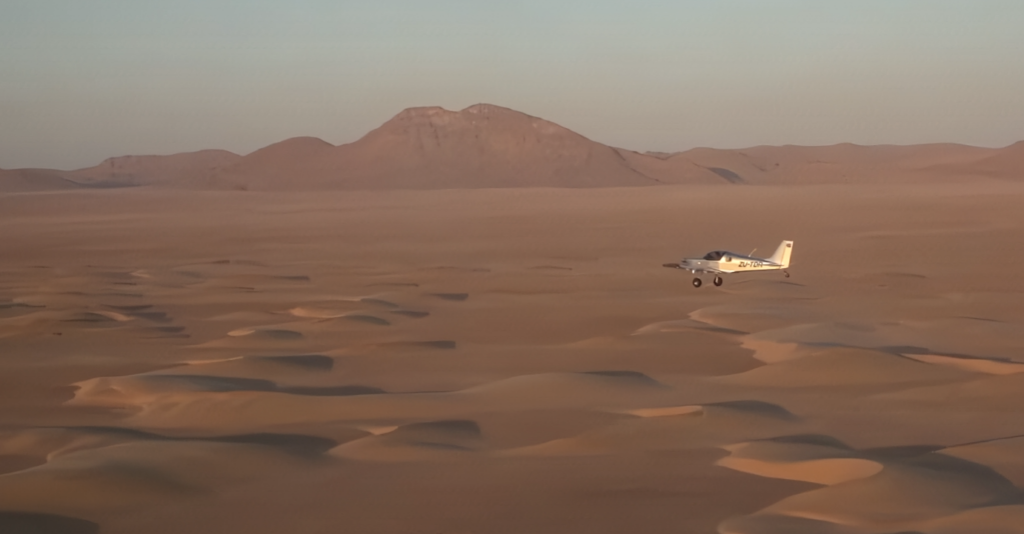
Africa Expeditions — Long before taking on the world, the Sling team flew extensively across the African continent. Africa is perhaps the ultimate test for a light aircraft: remote airstrips, unpredictable weather, extreme temperatures, and vast distances between fuel stops. Sling aircraft proved ideal for this environment, and the expeditions generated some of the most stunning aviation photography ever captured over the continent — from the red dunes of the Namib Desert to the Serengeti plains and the peaks of Kilimanjaro.
Transatlantic and Transcontinental Flights — Multiple Sling owners have completed solo and group transatlantic crossings, flying their kit-built aircraft from Europe to North America or South America via the island chains of the Atlantic. These flights, which would have seemed improbable in such a small aircraft, have become a rite of passage for the most adventurous Sling owners, aided by the aircraft’s surprisingly long range and efficient Rotax engines.
TSi Around the World (2022) — Continuing the tradition, Sling Aircraft completed a circumnavigation in the TSi model, this time showcasing the performance leap the turbocharged variant represents. The flight demonstrated that the TSi could handle high-altitude crossings and challenging weather that would have stretched the limits of the earlier Sling 2, opening up new routes and destinations for Sling pilots worldwide.
The Sling Pilot Academy Ferry Flights — Perhaps the most operationally impressive achievement is the regular delivery flights that the Sling Pilot Academy undertakes, flying newly completed aircraft from South Africa to customers in Europe, North America, and Australia. These ferry flights — often covering 20,000 km or more — are carried out in the very aircraft being delivered, serving as the ultimate proof-of-concept for every new owner. Student pilots have even participated in some of these deliveries as part of their advanced training.
Why Pilots Love Sling Aircraft
Talk to any Sling owner and the same themes emerge. The aircraft is genuinely pleasurable to fly — light on the controls, stable in cruise, with excellent visibility and a cockpit that doesn’t feel cramped even on long legs. The Rotax engine sips fuel economically and starts reliably in cold weather. The kit-building process, while requiring hundreds of hours of work, is well-documented and supported by an active community and responsive factory team.
There is also something deeply satisfying about flying a machine you built yourself to distant places. The adventure-first ethos that Mike Blyth and James Pitman embedded in the company’s DNA has never left. Sling pilots don’t just fly local circuits — they plan expeditions, cross continents, and turn flights into stories worth telling.