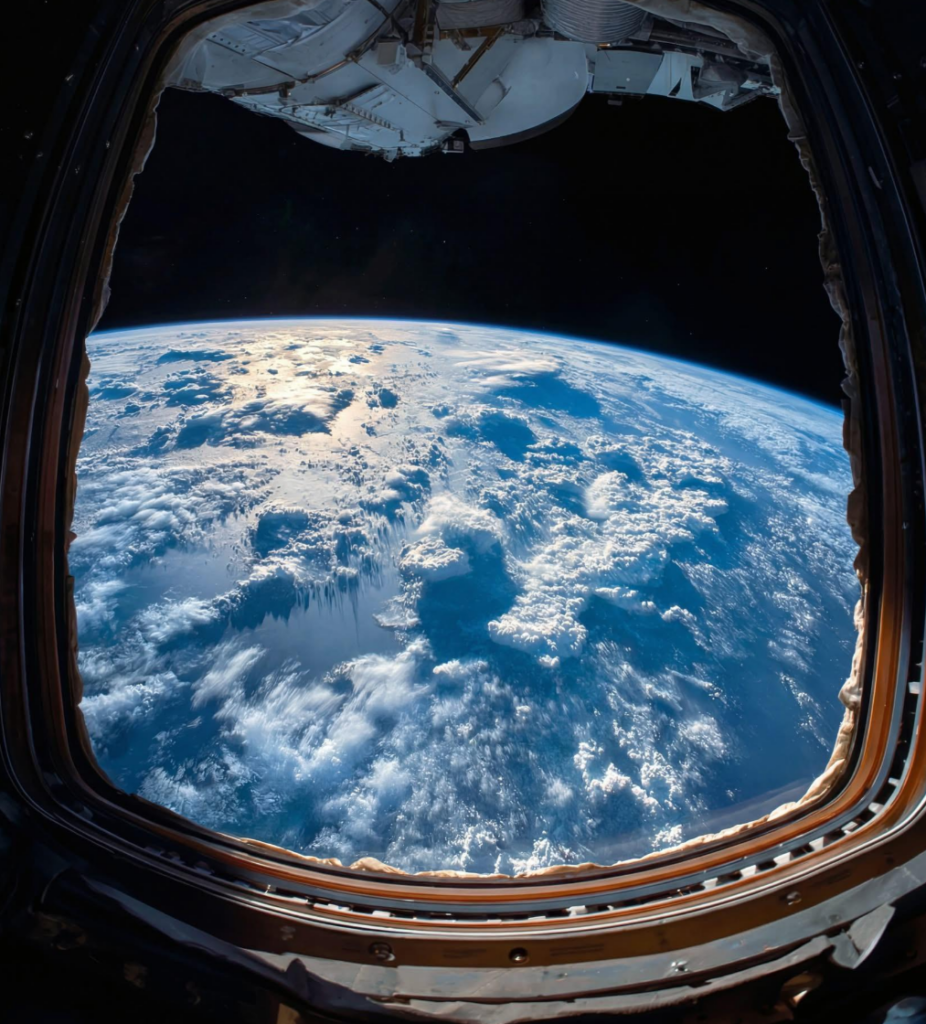
On April 1, 2026, NASA made history again. For the first time since Apollo 17 touched down on the lunar surface in December 1972, human beings are traveling toward the Moon. The Artemis II mission — carrying four astronauts aboard the Orion spacecraft on top of the massive Space Launch System (SLS) rocket — is not just a mission. It is the opening act of a new era of lunar exploration, one that aims for a permanent human presence on the Moon and, ultimately, a crewed journey to Mars.
The Crew: Breaking Records Before They Even Arrive
The Artemis II crew was selected with both expertise and symbolism in mind. Commander Reid Wiseman (50), a veteran NASA astronaut and former International Space Station commander, leads the mission. Pilot Victor Glover (49), a U.S. Navy aviator who previously flew on SpaceX Crew-1, becomes the first person of color to travel to the vicinity of the Moon. Mission Specialist Christina Koch (47), who holds the record for the longest single spaceflight by a woman at 328 days, becomes the first woman to venture to lunar distance. And Mission Specialist Jeremy Hansen (50) of the Canadian Space Agency becomes the first non-American citizen ever to travel beyond low Earth orbit — a milestone celebrated across Canada and around the world.
The crew named their Orion spacecraft Integrity — a nod to the trust placed in the technology, the team, and the mission itself. Their mission patch cleverly spells out „AII“ to look like the word „All,“ symbolizing a mission designed for all of humanity.
What Is Artemis II Actually Doing?
Artemis II is not a lunar landing — that milestone is planned for Artemis IV in 2028. Instead, this roughly 10-day mission is a critical systems validation flight that follows a free-return trajectory around the Moon. Think of it as the essential dress rehearsal before astronauts attempt to land.
After launching from Kennedy Space Center’s Launch Pad 39B at 6:35 p.m. EDT on April 1, 2026, the crew spent their first day in Earth orbit running exhaustive checks on Orion’s life support systems — air quality, temperature regulation, water, food, and waste systems. On Day 2, the spacecraft performed its Translunar Injection (TLI) burn, accelerating to over 39,000 km/h (24,500 mph) to break free of Earth’s gravitational hold and head toward the Moon. The crew also performed proximity operations tests using the spent rocket stage as a target — a rehearsal for future docking maneuvers.
During the multi-day transit, the astronauts are conducting tests on radiation protection, emergency procedures, and onboard communications. A key science investigation called AVATAR (A Virtual Astronaut Tissue Analog Response) uses organ-on-a-chip devices to study how deep space radiation and microgravity affect human tissue — research that will directly inform health planning for Mars missions.
The Historic Lunar Flyby: Setting New Records
On Day 6 of the mission — April 6, 2026 — the crew will reach the peak of their journey: a sweeping flyby around the Moon’s far side at a closest approach of between 6,400 and 9,700 km (roughly 4,000–6,000 miles). During this pass, the astronauts will capture detailed imagery and relay real-time observations of the lunar surface to mission control.
The flyby will also shatter a long-standing record. Artemis II is expected to reach a maximum distance of 406,773 km (252,757 miles) from Earth — surpassing the record set by Apollo 13 back in April 1970, which has stood unchallenged for 56 years. That Apollo 13 record was itself an unplanned consequence of the mission’s famous near-disaster. The Artemis II crew will break it intentionally, in full view of the world.
After the flyby, Orion’s free-return trajectory means the spacecraft will naturally arc back toward Earth — even without firing its engines again — thanks to the Moon’s gravitational influence. The crew will splash down in the Pacific Ocean to complete the mission.
The Bigger Picture: Where Artemis Goes From Here
Artemis II sits at the center of NASA’s most ambitious long-term lunar strategy since Apollo. The program is built around a series of increasingly complex missions, each laying groundwork for the next.
Artemis III (planned for mid-2027) will keep astronauts in low Earth orbit to conduct rendezvous and docking tests with commercial lunar landers from SpaceX (Starship HLS) and Blue Origin (Blue Moon), as well as test the new Axiom Extravehicular Mobility Unit (AxEMU) spacesuit. Artemis IV, targeting early 2028, is now the mission designated for the first crewed lunar landing, with a focus on the Moon’s south polar region — where water ice deposits are believed to exist. NASA plans annual landings thereafter, working toward a permanent lunar base. The long-term goal is to use the Moon as a proving ground and staging point for eventual human missions to Mars.
Artemis is also a fundamentally international enterprise. Over 60 nations have signed the Artemis Accords, pledging peaceful cooperation in space exploration. The European Space Agency provided the crucial service module for the Orion spacecraft. Canada’s participation — embodied by Jeremy Hansen — reflects the program’s ambition to carry humanity to the Moon, not just America.
Why Artemis II Matters Right Now
Beyond the technical milestones, Artemis II carries profound symbolic weight. Every member of the crew is making history on a personal level. The mission is unfolding in the context of a modern space race, with China aiming to put its own astronauts on the Moon by 2030. And it represents the culmination of years of engineering work — from the SLS rocket (a direct descendant of Space Shuttle technology) to the Orion capsule built to survive the extreme heat of deep space reentry.
As NASA Administrator Jared Isaacman put it at launch, Artemis II is the start of something bigger than any one mission — a return to the Moon not just to visit, but eventually to stay. The crew of Integrity — Wiseman, Glover, Koch, and Hansen — are, right now, farther from Earth than any human has been in more than half a century. They are proving that the next giant leap is within reach.